Spärck at the museum

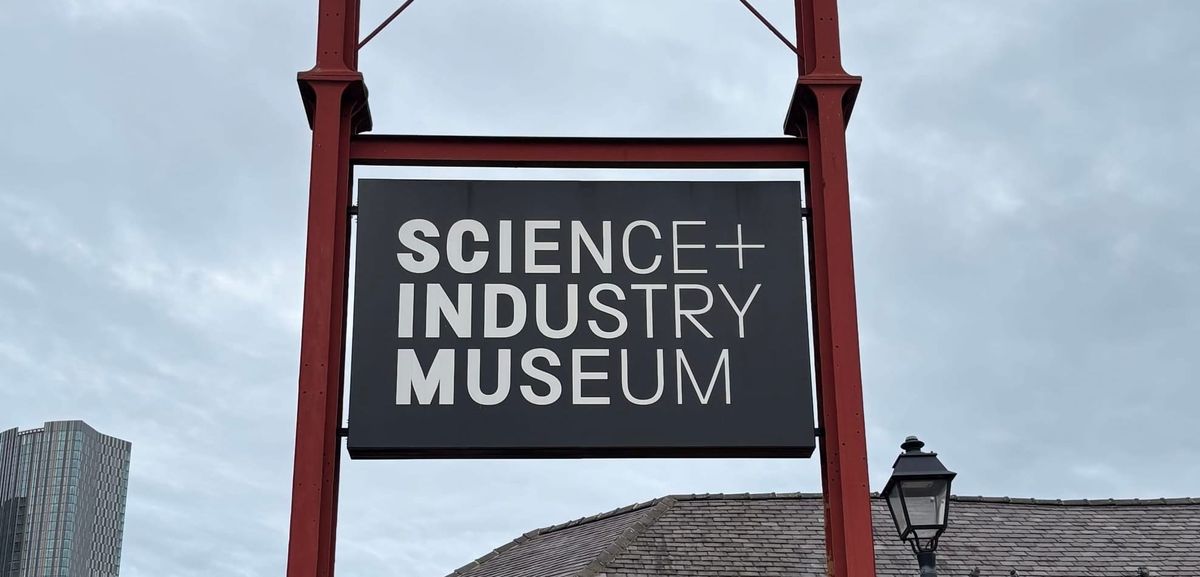
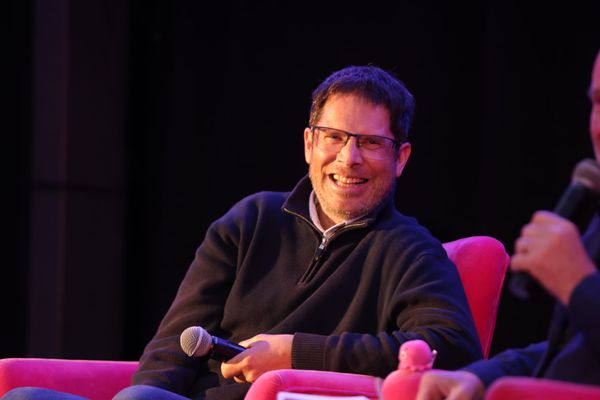
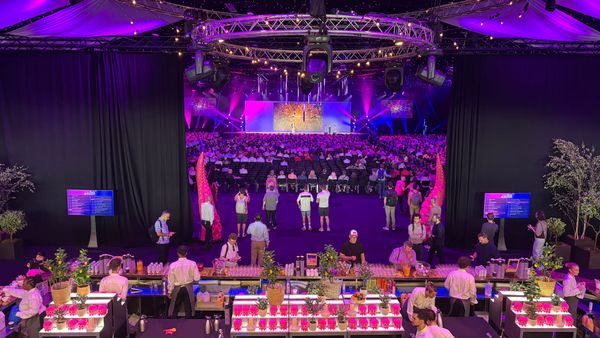
The Spärck scholarship launched a few weeks ago at the Manchester science & industry museum.
DSIT are sponsoring 80 MSc students studying AI over the next year and part of the two-day launch was a Hackathon for the students to work with businesses supporting the scholarship on a tailored AI related challenge. Over the summer I’ve led three other hackathons - twice with our interns and the third with The King's Trust - so I was keen to see the difference between A-level students and MSc students.
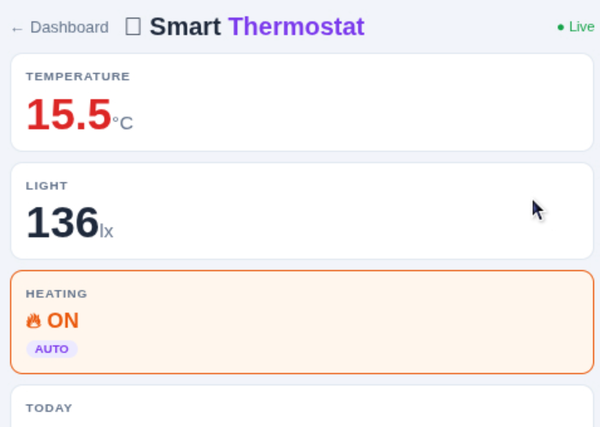
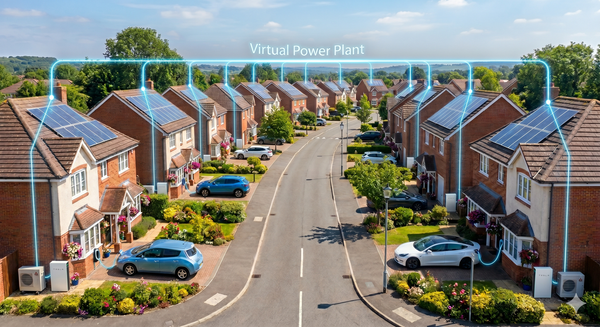
I wrote about the hardware ideas from the first three events where the students surprised themselves by creating a smart thermostat, and other services, in a morning. For the Spärck scholars I set a harder challenge - what would the electricity system look like in 10 to 20 years, what role will AI play and would we get to an energy as a service model akin to a subscription instead of a price per kWh.
Energy as a Service models (and Heat as a Service) have been debated and experimented with for years but we always come back to paying per kWh consumed. As soon as you move to a service version then fair use policies take over as someone has to hold the risk of generation cost versus excessive (unfair) use. The marginal cost of wind & solar generation is virtually nil (although yes CfDs), so all the cost moves to delivery, flexibility and capital recovery. In other words what happens if we have excessive amounts of generation, a smart flexible grid that can deliver it and I wonder if the unfairness disappears (total annual consumption).
We explored the role of V2G, Heating/Cooling, home Solar/Storage and the combination of automated flexibility (extending what we do now with IO-Go) everywhere. Inevitably we ended up with a service payment still tuned in some way to consumption - large or small home, what tech installed, user preferences and inevitably fair use etc. It showed how hard it is to get out of the rut of cost per kWh.
The idea of a capacity connection (recent revisit by Citizens Advice) fits in here. But this is also the opposite of low standing charges as essentially a service model is one very large standing charge. Fairness is probably still going to be the deciding factor.
To inspire the scholars, and it turns out the organisations attending too, on the first day of the event it was fascinating learning from Professor Ann Copestake (NLP professor at Cambridge and former Head of the Department of Computer Science and Technology) about Professor Karen Spärck Jones whom the scholarship is named after. Spärck’s work at Cambridge is probably the root of what we call AI today. Her research on computational meaning of words focused on Natural Language Processing (NLP) and Information Retrieval (IR) which combine to give us NLIR (Natural Language and Information Retrieval) or NLIP (Natural Language and Information Processing). Her work was based on Shannon’s information theory leading to the idea of a thesaurus as a classifier. Her Phd developed the classification of language - what’s the semantics, meaning, of sentences and how clustering of words helps with categorisation; in other words trying to define mathematical meaning.
“You shall know a word by the company it keeps” as Firth 1957, wrote (A Synopsis of Linguistic Theory, 1930–1955).
She defined Inverse Document Frequency (IDF) in 1972 which underpins TF-IDF (Term Frequency - Inverse Document Frequency) which is used in search engines. Her PhD thesis (1964) focused on "synonymy and thesauri using vector spaces/clustering which applied weight to search terms/words that are low frequency" which became the source for internet search engines. Thus we have a natural language information layer but really we still don’t fully know how to measure information from words.
We then heard about a range of uses of AI showing how broad it can be applied.
Professor Anna Scaife (Professor of Radio Astronomy at the University of Manchester) covered Alpha Fold (protein folding) talking about how AI has accelerated the Design, Build, Test, Learn (DBTL) cycle for discovering new proteins and drug discovery. Alpha Fold learnt from the Protein Data Bank (PDB) of 170,000 researched proteins that had been assembled over 30 years. Like Spärck’s use of large volumes of text, Alpha Fold learned from this database.
Turning to astrophysics, Scaife discussed how you can’t follow a DBTL cycle and instead you have to infer from measurements - a different use of AI. Zoobot uses Galaxy Zoo citizen-science labels of over 1,000,000 galaxies which citizen scientists have manually classified into spiral, ring, elliptical, etc and that manual classification has become the database for AI to learn to classify even more galaxies. But she also explained how taking citizen scientists' freeform text comments about ‘weird’ galaxies that clusters of weird ones become visible which is quite unexpected. The Euclid telescope is likely to detect 1,000,000,000 galaxies so the Zoobot classification acts as the learning needed for AI to classify galaxies found by Euclid.
And finally we heard how CERN’s LHC experiments (such as ATLAS/CMS) use ultra-fast, hardware-level AI triggers (FPGAs running in nanoseconds) to decide what data to keep from a particle collision experiment as the raw data volume is far too vast to keep everything.
Scaife concluded by outlining the future of AI powered drug research labs where the whole DBTL cycle can be automated and so speeding up drug research much more rapidly.
Coming back to AI in energy I don’t think we’ve even started to consider what the applications are. AI power grid optimisation is obviously happening now but I can’t feel there’s far more to come. I hope my involvement with one of the scholar teams over the two days keeps the application of AI in energy on their minds throughout the academic year. Good luck scholars!
The News: September 2026
I subscribe to many newsletters and read a lot of articles every month. This is my distilled list of those that I've found most interesting this month with my thoughts on what's happening.
Ofgem have a new consultation out
"We are consulting on proposed modifications to the Gas and Electricity Supply Licence Standard Licence Conditions. These proposed changes would enable suppliers, and their smart meter installers, to provide consumers with factual and non-promotional information on low carbon technologies (LCTs) during a smart meter installation visit. This could include information on their availability, energy efficiency, and potential costs and benefits. The intent of this proposal is to remove unnecessary regulatory uncertainty that may prevent consumers from receiving factual and non-promotional information about LCTs during a smart meter installation visit, while maintaining protections against unsolicited marketing or sales activity in the home."Low carbon technology information: proposed changes to the electricity and gas supply standard licence conditions
The original purpose of this area of the rules was to stop any hard sell tactics by an engineer in your home which is fair enough - it's disruptive having the power off so having someone in your home selling stuff is poor form. But the rules require advice be given on generic energy saving measurements so do we really need this consultation that that advice could now include suggestions of heat pumps, solar/battery systems and electric car chargers if it was already ok to mention perhaps getting loft insulation.
Solar Power Portal: 400MW/800MWh Hunterston battery
Scottish wind curtailment is frequently in the news so seeing another transmission scale connected battery approved is good news. Solar Power Portal also cover the other recent grid scale battery investment happening in Scotland too.
Revera closes financing, begins construction of 400MW Scottish BESS
Keele University: ZincGel® battery trial
Continuing with batteries, lithium iron phosphate (LFP) is the common battery chemistry, but we also see nickel manganese cobalt (NMC) and more recently Sodium-ion. Lithium and Nickel obviously have the challenge of ethical sourcing which Sodium solves. But there's a new UK business, Offgrid Energy Labs, working on their proprietary ZincGel® chemistry which they'll be trialling at Keele University.
I've been up to Keele a couple of times; if you get a chance to visit it's worth seeing their own solar farm and pair of wind turbines. Professor Raphael Hirschi and I are both on the ESA board.
New type of energy storage battery to be trialled at Keele in UK first
Great British Energy: Open for business
GBE launched and earlier this week announced funding for community renewable & storage development. This is mainly focused on installs on schools, libraries, emergency services, village halls, sports centres etc. Ideally I'd want to see how this doesn't just mean lower energy bills for those premises but also how local homes can benefit too - see next story.
‘People’s Power’ projects to give more control over local energy
Younity & Octopus: People Power launched
This is a project I've been leading on through our Octopus Labs service where we also launched Powerloop, Tenant Power, Electric Match, etc. We ran the Energy Local scheme using P441 under trial conditions (as it's not approved yet) for a few years but more recently decided to use P442 instead. We've now launched this with Younity (coop joint venture) and I'm looking forward to seeing communities powered by this.
People Power is here – and Younity is ready to power up the community energy sector
Running a Cosy Heat Pump is cheaper than a gas for 99.6% of installs
A while ago we launched a live dashboard of the aggregated performance of all Cosy heat pumps. A year's worth of data (to allow for seasonal variations) across the country show the saving is real. In fact the average saving at July 2026 is £230/year.
99% of Octopus Cosy heat pump owners pay less to heat their homes than they would with gas